A short distance off the Portuguese coast, a steam locomotive built in England and intended for the railways of India may still lie on the seabed. It never reached its destination. Its journey ended on the night of 10–11 October 1881, when the British steamship Corsica struck rocks near Cabo da Roca and sank within minutes.
Twenty-one men died. The ship took down roughly 1,720 tons of cargo, including an unusual articulated metre-gauge locomotive built by the Avonside Engine Company.
The loss was recorded in an official British inquiry, yet the locomotive’s presence aboard the vessel was not identified until more than a century later, through railway research.
This is the story of a remarkable machine that should have worked in the mountains of India, but whose first journey ended in the sea off Portugal.
The Corsica
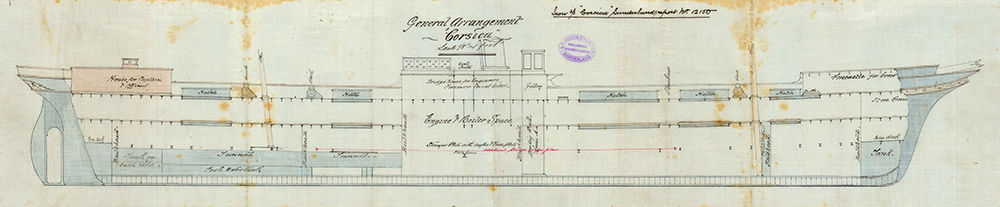
Built in 1863 by James & George Thomson at Govan, near Glasgow, the Corsica was a British iron-hulled steamship driven by a single screw. She was recorded as the builder’s yard number 62 and was assigned the British official number 44819.
The vessel was about 83 metres long, with a beam of 9.8 metres. The inquiry held after the wreck gave her tonnage as 1,589 gross and 1,042 net tons, and recorded an engine power of 150 horsepower. She was not a great transatlantic liner, but she was a sizeable merchant steamship for her day, equipped to carry cargo and passengers on long-distance voyages.
Her career began with Cunard, one of Britain’s leading steamship companies. She later passed to the Royal Mail Steam Packet Company, in whose service she sailed for several years, before being acquired by the Bristol Steam Navigation Company. That company owned the ship at the time of her final voyage.
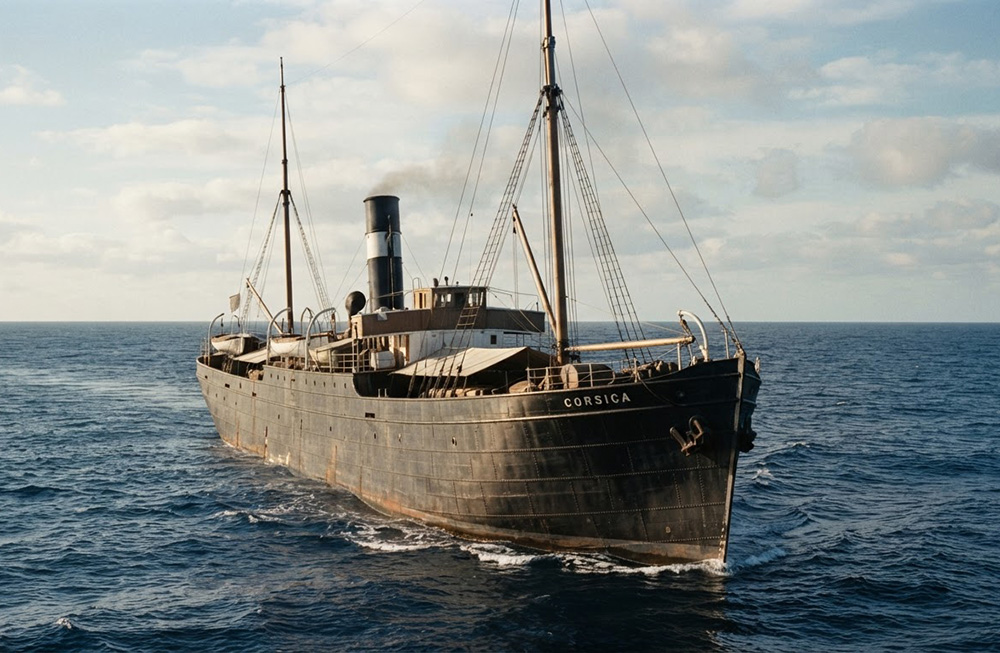
Across almost two decades, the Corsica reflected the rapid development of steam navigation. In 1879, her original machinery was replaced by a compound engine, which used steam more efficiently and reduced coal consumption. Outwardly she retained the characteristic profile of a mid-nineteenth-century merchant steamer: a long, low hull, one central funnel and two masts, which could still assist under sail or be used when handling cargo.
The final voyage
In 1881, the Corsica was registered at Bristol and belonged to the Bristol Steam Navigation Company. She was commanded by Captain Holt Shapcott, an experienced mariner who was to take the vessel on the long passage from London to Bombay.
The steamship left London on 7 October with a crew of 26 men and about 1,720 tons of general cargo. Her destination was Bombay, one of the principal ports of British India. Among the cargo was one particularly unusual item: a metre-gauge articulated locomotive built by the Avonside Engine Company for the Indian State Railways.
The sea passage was only the first stage of a journey that should have taken the locomotive into the mountains of the Indian subcontinent. Its first long-distance journey would not be made on rails, but inside a merchant steamship.
There was no suggestion that the Corsica had sailed in an unseaworthy condition. The inquiry held after the casualty found the vessel fit for sea and identified no significant defects in her machinery or safety equipment. The lifeboats were in place, and the ship was proceeding normally towards her destination.
Four days after leaving London, on the night of 10–11 October, the Corsica approached the Portuguese coast. The weather was favourable, visibility was good and the light at Cabo da Roca could be seen clearly. Shortly before midnight, the ship was making about nine knots and appeared to be in no difficulty.
The voyage had passed without any known incident. A decision taken on the bridge, however, would bring the Corsica dangerously close to the rocks and turn this passage along the Portuguese coast into her last.
The wreck
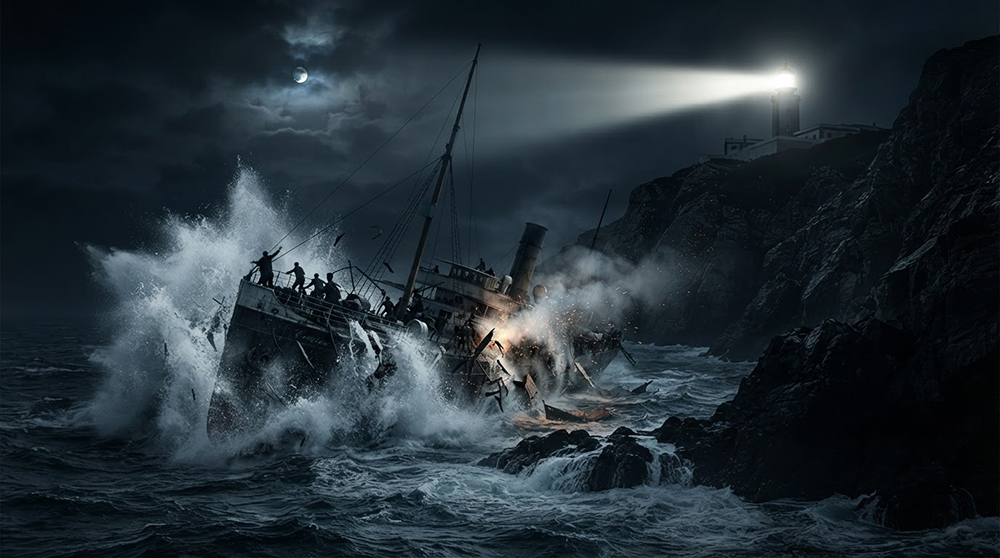
At 11 p.m., the Cabo da Roca light lay a little on the port bow. Half an hour later, when Captain Holt Shapcott came onto the bridge, the Corsica was already about three miles from the lighthouse. The steamship continued at nine knots, with the sea comparatively calm and the Portuguese coast plainly visible.
Soon afterwards, the master ordered the helm to starboard, bringing the vessel onto a south-westerly heading. This was the alteration of course that should have taken her south towards Cape St Vincent, but it was made too soon. The Corsica had not yet stood far enough off Cabo da Roca.
Ten or twelve minutes later, the steamship struck the rocks. Her iron hull scraped along them on the port side, although the ship did not immediately come to a stop. The master tried to work her away from the coast while the engines continued to run. Soon afterwards, the carpenter brought the news everyone feared: water was entering rapidly.
The order to ready the boats was given at once. The crew went to the port lifeboat amidships, but the lowering gear jammed as they tried to launch it. There was no longer time to put matters right. About ten minutes after the impact, and only two minutes after the engines had stopped, the Corsica went beneath the surface, taking the ship and all her cargo with her.
One of the boats eventually broke free and came back to the surface full of water. Seven men managed to climb into it. They remained near the wreck for roughly two hours and then tried to row towards Cabo da Roca, but the heavy surf prevented them from approaching the shore. They turned south instead, searching for a more sheltered place to land.
They did not attempt to reach land until daybreak. One man was swept from the boat by a wave and drowned; another died shortly after landing. The five survivors were taken to Cascais, where the Portuguese authorities gave them assistance. The remaining 21 crewmen, including the master and every officer, lost their lives.
The British inquiry found no serious fault in the ship, her machinery or her safety equipment. It also dismissed rumours of drunkenness and deliberate scuttling that had circulated after the disaster. Its conclusion was unequivocal: the Corsica had approached too close to the coast, and the master had altered course before passing safely clear of Cabo da Roca.
Tugs sent out later failed to locate the hull. Witnesses placed it about a mile offshore and in roughly twenty fathoms of water—approximately 36 metres—but the court itself acknowledged that this position was only an estimate. The general area of the wreck is known; an exact and publicly documented position for the remains has not, however, been confirmed.
The locomotive
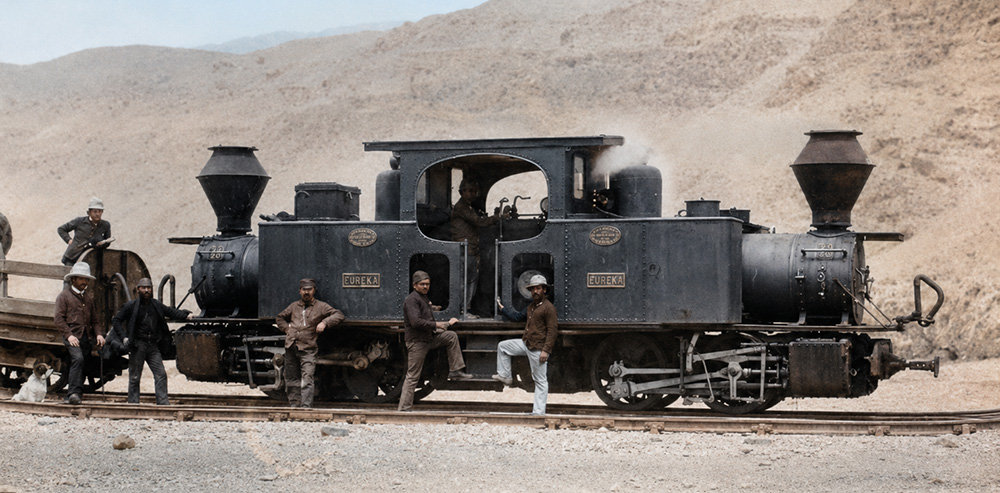
Inside the Corsica was a machine that would never touch the rails. It had been built in Bristol by the Avonside Engine Company for the Indian State Railways. This was no conventional locomotive, but an articulated metre-gauge Double Fairlie, designed to negotiate sharp curves and steep gradients in the mountains of British India’s north-west frontier.
Its presence aboard the ship is identified in a survey published in 2007 by Mike Hudson and Philip Atkins in the British journal The Railway Magazine. In their table of locomotives lost during sea transport, the Corsica is linked to an Avonside metre-gauge engine of the 0-4-4-0T type, intended for the Indian State Railways. The date given is 1880, one year before the documented wreck, but the remaining details match the locomotive lost off Portugal.
The engine belonged to a particularly ambitious order. In 1879, the Government of India contracted Avonside to build 25 Double Fairlie locomotives for a proposed military railway through the Bolan Pass, now in Pakistan. The order arose during the Second Anglo-Afghan War, as the British sought to improve communications rapidly between the Indus valley and the Afghan frontier.
Military and railway plans then changed. The order was reduced, but 17 locomotives had already been completed. They were accepted into Indian State Railways stock and are believed to have been numbered 361 to 377. One was sold to a Bombay contractor, fifteen were sent to the Bolan Pass area, and the remaining engine was lost at sea in transit. It was the locomotive carried by the Corsica.
The surviving records allow a reasonably precise technical outline to be drawn. Built in 1880 for 1,000 mm gauge, the engine had four cylinders measuring 11 by 17 inches—approximately 279 by 432 millimetres. Its driving wheels were three feet in diameter, about 914 millimetres. The wheel arrangement is commonly given as 0-4-4-0T, although the more exact articulated notation is 0-4-0+0-4-0T.
It was a Double Fairlie: a symmetrical locomotive carried on two articulated powered bogies and particularly well suited to sharply curved mountain railways.
The builder’s numbering adds another curious detail. The batch is recorded under Avonside numbers 1245 to 1278—34 numbers for only 17 locomotives. The explanation appears to lie in the builder’s practice of assigning two works numbers to each Double Fairlie, one for each powered half. The engines would therefore have corresponded to the pairs 1245/1246, 1247/1248, and so on, up to 1277/1278.
It has not yet been possible to establish which pair belonged to the locomotive carried aboard the Corsica, or to connect it with a particular running number between 361 and 377. Nor is it known whether the engine already carried Indian State Railways plates, whether it was shipped fully assembled or in separate components, or where exactly it was stowed in the vessel. No known source gives it an individual name.
This was therefore no ordinary piece of cargo, but an uncommon articulated locomotive built for one of the most demanding mountain railways in the British Empire.
From the Bolan Pass to the Nilgiri Mountains
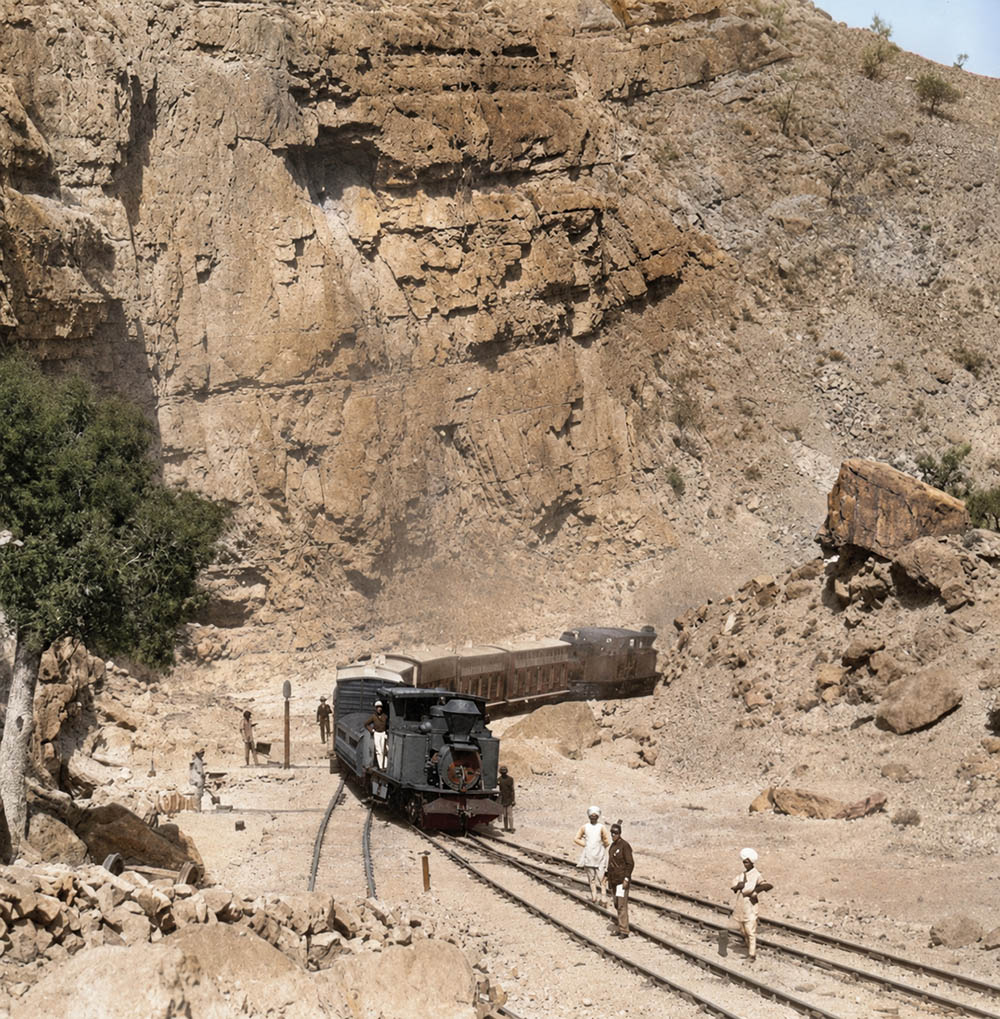
The fifteen locomotives that reached India were first sent to the north-west frontier, where they were expected to perform the task for which they had been built: hauling trains over a new military railway through the Bolan Pass.
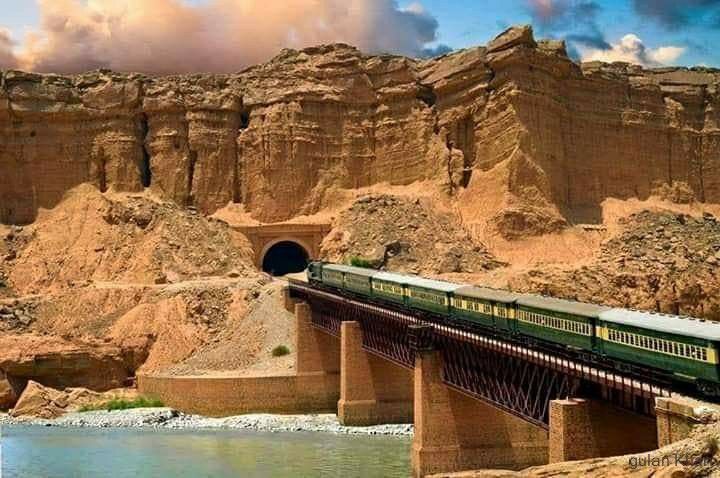
Now in Pakistan, the Bolan Pass was one of the principal routes between the Indus valley and Afghanistan. The region posed formidable problems for railway construction. The line ran through narrow valleys and mountainous ground, demanding sharp curves, severe gradients and substantial engineering works in remote country. It was precisely the setting in which the Double Fairlie’s qualities seemed most promising.
The locomotives entered service on the metre-gauge Mushkaf–Bolan Railway during the 1880s. A technical study published in 1890 confirms the use of Fairlie engines on the line, while a historical photograph held by the British Library and catalogued as ‘Bolan Pass. Fairlie Engines’ shows locomotives of this type during railway construction in Balochistan.
In the arid and isolated surroundings of the Bolan Pass, the system’s shortcomings became particularly apparent. Limited range made frequent replenishment necessary, while the complicated joints and articulated steam pipes made routine maintenance difficult.
The Avonsides’ career on the Bolan Pass was consequently fairly short. By about 1887, the locomotives appear to have been withdrawn from front-line service or placed in store. New railway construction, the adoption of more conventional locomotives and the gradual conversion of strategic routes to broader gauges further reduced the usefulness of the small articulated fleet.
Their story, however, was far from over. In 1896, ten of the former Fairlies were transferred to Burma, then part of British India. They became the class known as D old and were used on the difficult Mandalay–Lashio line, another mountain railway characterised by steep gradients and sharp curves.
There too, the older locomotives proved inadequate for growing traffic. The experience did not lead to an immediate abandonment of the concept. Instead, the Burma Railways ordered larger Double Fairlies from the Vulcan Foundry, with six driving wheels in each articulated group, in an attempt to gain more power without losing the flexibility required on mountain lines.
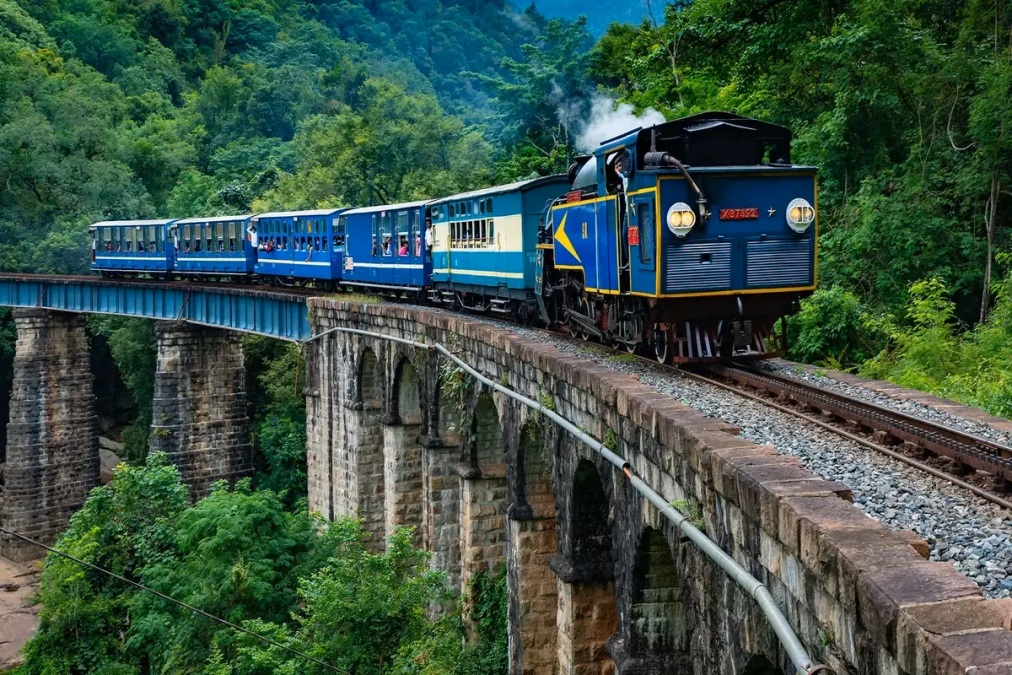
Four of the Avonsides followed a different path. In 1907, they were transferred to the Nilgiri Mountain Railway in southern India, where they received the numbers 1 to 4. They worked during construction and in the early years of the line to Ootacamund—now Udhagamandalam, or Ooty—one of India’s best-known mountain railways.
Photographs taken near Coonoor show one of these locomotives at the head of a short train. They are especially important to the story of the Corsica: the engines came from the same batch and give us a close impression of the appearance of the locomotive that disappeared off Cabo da Roca. All four Fairlies were still documented in 1914, although they were eventually replaced by locomotives better suited to the line.
The fate of the fifteenth engine sent to the Bolan Pass remains unclear. The batch was dispersed across several territories, and some of the locomotives enjoyed far longer careers than might originally have been expected.
Even so, the sister engines show the future that had awaited the locomotive carried aboard the Corsica: a hard life on mountain railways, far from Bristol, serving a network bound up with British political and military expansion in Asia.
A journey cut short
The sister engines of the lost locomotive crossed the Bolan Pass, worked in the mountains of Burma and reached the Nilgiri railways. The machine carried by the Corsica, however, never entered service.
Its individual number remains unknown, as does the exact and publicly documented position of the wreck. That uncertainty does nothing to lessen the singular nature of the story: a British locomotive intended for the mountains of India became permanently linked with the Portuguese coast.
More than 140 years later, the Corsica Double Fairlie still represents an unlikely meeting of maritime and railway history.
Its first journey ended at sea, before its wheels had travelled a single kilometre in Indian State Railways service.
Somewhere off Cabo da Roca, one of the most unusual railway relics associated with Portugal may still remain.
Sources and bibliography
Documentary and contemporary sources
- Board of Trade — official inquiry into the wreck of the steamship Corsica, 1881–1882.
- Lloyd’s Register of British and Foreign Shipping — entries relating to the steamship Corsica.
- Lloyd’s Loss and Casualty Books — entry concerning the loss of the Corsica.
- The National Archives, London — series CUST 34, CUST 66, CUST 67 and CUST 68.
- India Office Records — records concerning locomotives intended for the Indian State Railways and the railways of the Bolan Pass.
- Royal Museums Greenwich — technical documentation and historical records relating to the steamship Corsica.
Railway studies
- HUDSON, Mike; ATKINS, Philip — ‘Locos Lost at Sea: The All-Time Definitive Record’. The Railway Magazine, no. 1277, September 2007.
- HUGHES, Hugh — Indian Locomotives, Part 1: Broad Gauge 1853–1940. Harrow: The Continental Railway Circle, 1990.
- HUGHES, Hugh — Indian Locomotives, Part 2: Metre Gauge 1872–1940. Harrow: The Continental Railway Circle, 1992.
- MARSHALL, Lawrence G. — Indian Metre Gauge Locomotives. London: David & Charles, 1975.
Image and digital sources
- Alexander Turnbull Library, Godber Collection — historical photographs of Double Fairlie locomotives.
- British Library — photographic collections relating to the Bolan Pass and the railways of British India.
- Lloyd’s Register Foundation — plans and technical documentation for the steamship Corsica.
- Wikimedia Commons — public-domain historical images relating to Fairlie locomotives, the Bolan Pass and the Nilgiri Mountain Railway.
Comments
There are no approved comments yet.